To decide how many custom ties to order, count every current wearer, add a small spare stock for new joiners, losses and damage, then split the total by length and style. Get Custom Ties starts at a minimum of 12 ties, returns a free mockup within 24 hours and delivers in about 2 weeks, so planning the count is the main job.
- Minimum order is 12 ties per design
- Free mockup within 24 hours, unlimited free revisions
- Standard turnaround is about 2 weeks, with faster delivery available through express shipping
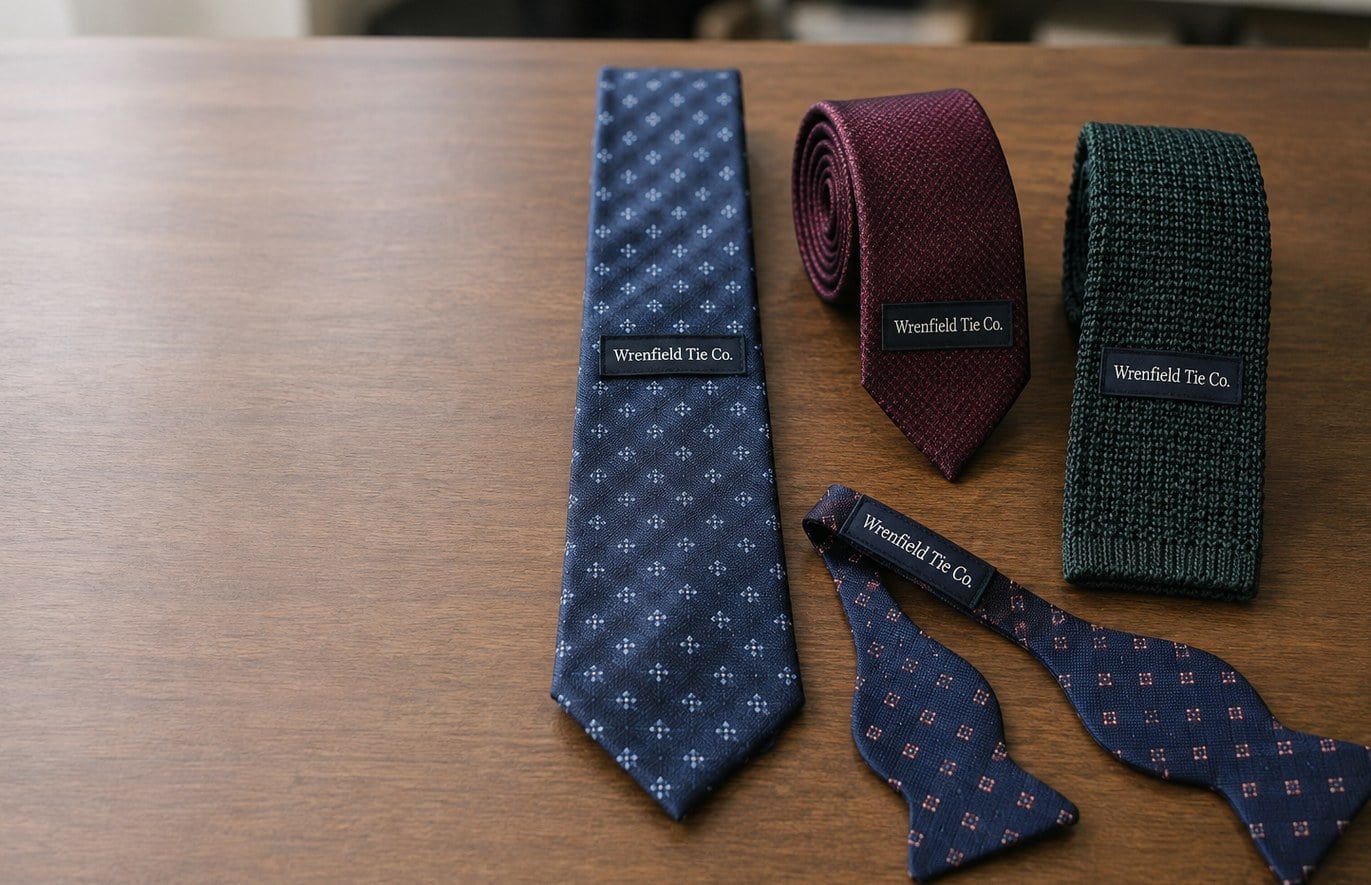
- Neckties, bow ties, clip-on ties and skinny ties can share one design
- You pay nothing until you approve the design
How do I work out the right number of custom ties for my group?
The right number of custom ties is your headcount of regular wearers plus a deliberate spare stock, not a round number picked on instinct. Start with a list of names rather than an estimate. A named list shows you who actually wears a tie every day, who wears one only for events, and who might need two because they rotate shifts back to back.
Once the list exists, sort it into three groups: daily wearers, occasional wearers and future wearers. Daily wearers often benefit from a second tie so one can be cleaned while the other is in use. Occasional wearers, such as board members or alumni who attend a few functions, usually need just one. Future wearers are the new hires, incoming students or new members you expect before the next reorder could arrive.
- Daily wearers: consider two ties each so a tie is always ready.
- Occasional wearers: one tie each is usually enough.
- Future wearers: estimate from your hiring, enrollment or membership history.
Add those groups together and you have a working total. Get Custom Ties can then quote that number, and the free mockup within 24 hours lets you confirm the design before the count is final.
How many spare custom ties should we keep on hand?
Spare custom ties should cover the joiners and replacements you expect before a reorder could realistically land, which with a standard turnaround of about 2 weeks plus approval time is usually a few weeks of need. A small group with steady staff can keep a handful of spares. A large hotel, school or security company with frequent turnover should keep a deeper reserve.
Think about where ties actually go. They get left in lockers, stained at banquets, snagged on equipment and taken home by people who leave. Each of those becomes a new request, and having a spare in a drawer is far faster than placing a rushed order for one person.
Spares also protect consistency. A tie pulled from the same production run as everyone else’s will match exactly, while a later run is matched to your approved design and color references. Keeping a reserve from the original batch means the newest team member looks identical to the longest-serving one on day one.
If you are unsure, ask Get Custom Ties to quote two versions of the order, one with a lean spare stock and one with a fuller reserve, and compare them side by side before you approve the mockup.
Should we order standard and extra-long custom ties in the same run?
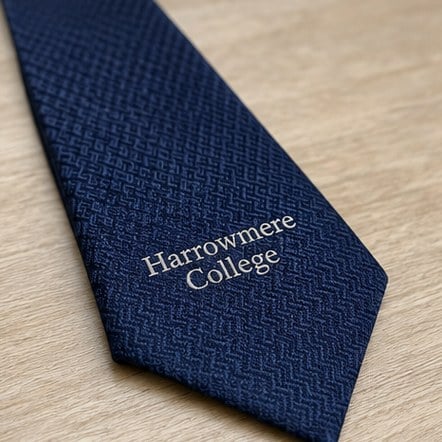
Yes, splitting custom ties between standard and extra-long lengths is one of the most useful ways to plan a run, because a tie that sits too high on a tall wearer looks wrong no matter how good the design is. Ask your group for length preferences before you finalize quantities rather than guessing afterward.
The simplest method is a short form with each person’s name, role and preferred length. Taller staff, players and teachers often ask for extra-long ties, and younger students may need a shorter cut. Those choices should be captured on the order rather than handled with alterations later.
| Wearer group | Typical length choice | Planning note |
|---|---|---|
| Most adult staff | Standard | Usually the largest share of the order |
| Tall staff or players | Extra-long | Ask directly instead of assuming |
| Younger students | Shorter or clip-on | Confirm with the school uniform policy |
| Event-only wearers | Standard | One tie each is usually enough |
Keep a few spares in each length, not just the most common one. A spare stock made entirely of standard ties will not help when an extra-long wearer joins next month.
How do clip-on, bow and skinny ties change the count?
Clip-on ties, bow ties and skinny ties each need their own count inside the order, because a person who wears one style cannot borrow from the stock of another. Treat every style as a separate line with its own spares, even when all of them carry the same artwork.
Clip-on ties suit roles where a quick release matters, such as security, care work, valet and parking teams, and some younger school grades. Bow ties are common for banquet servers, bartenders and formal event staff. Skinny and knitted ties fit retail floors and creative teams that want a more modern uniform.
- List which roles wear which style before you total anything.
- Give each style its own small reserve of spares.
- Check that each style reaches the minimum of 12 ties, or confirm with Get Custom Ties how mixed styles are quoted.
Mixing styles under one design keeps the whole team visually connected while letting each role wear what is practical. You can browse clip-on and safety ties and bow ties to see which styles your roles need before you build the final count.
Does ordering more custom ties at once make sense?
Ordering more custom ties in one run often makes sense when the design is stable, because setup work is shared across a larger quantity and every tie comes from the same production batch. The case for a bigger order weakens when the logo, colors or uniform policy are likely to change soon.
Weigh the decision against a few practical questions. Is a rebrand or new uniform policy on the horizon? Do you have dry, clean storage space for a larger reserve? Will turnover in the next year use up the extra ties, or will they sit unused? A bigger order is only good value if the ties are actually worn.
Fabric and method matter too. Woven silk ties are a long-term investment that suits a stable crest or logo, while printed silk ties handle detailed or multi-color artwork. Get Custom Ties does not publish set prices here, so the clearest way to compare is to request quotes at two or three quantities and see how the totals move.
Whatever you decide, you pay nothing until you approve the design, so comparing quantities costs nothing but a few minutes.
When should a school, club or company plan its custom tie reorder?
Plan a custom tie reorder when your spare stock drops to the amount you would need during one standard turnaround of about 2 weeks plus approval time, not when the drawer is already empty. Setting that trigger point in advance stops the reorder from becoming an emergency.
- Set a reorder point: decide the number of spares that should prompt a new order.
- Check stock on a calendar: schools often review before a new term, companies before peak hiring, clubs before their main season or annual dinner.
- Confirm the design file: send the same approved artwork and color references used last time.
- Approve the mockup: Get Custom Ties returns a free mockup within 24 hours.
- Receive and restock: standard turnaround is about 2 weeks, with faster turnaround available through express shipping.
Schools benefit most from a fixed calendar, because new students arrive in predictable waves. Hotels and hospitality groups tend to reorder around seasonal hiring, which is covered in our guide to custom ties for hotels and hospitality staff. Clubs usually reorder ahead of a membership drive or a formal event where new members expect to wear the tie.
What are the most common quantity mistakes on a first tie order?
The most common quantity mistakes on a first custom tie order are counting only today’s wearers, ignoring length and style differences, and ordering zero spares. Each of these leads to a rushed small reorder within weeks of the first delivery.
- No future wearers: new hires and new members arrive soon after launch, especially when a uniform is new.
- One length for everyone: tall wearers end up with ties that look short, and the problem is visible in every photo.
- One style for every role: staff who need clip-ons or bow ties improvise with the wrong tie.
- Ordering before the design is final: a late change to the logo leaves a reserve of outdated ties.
- No record of the order: without the approved file and color references, the next run is harder to match.
Avoiding these takes very little effort. Build the named list, split it by length and style, add a sensible reserve and keep a copy of the approved mockup. Get Custom Ties offers unlimited free revisions on the mockup, so settle the design completely before the count is locked.
For a full walkthrough of the ordering steps, see how it works, then request a custom quote with your planned totals.
Frequently asked questions
Should we order extra custom ties for employees we have not hired yet?
Custom ties for future hires are worth including when you expect new staff before a reorder could arrive. Look at how many people joined over a similar period last year and add a reserve on that basis. Get Custom Ties produces every tie in the run from the same approved design, so a new employee receives a tie that matches the rest of the team on their first day.
Do tall staff members need extra-long custom ties?
Custom ties in an extra-long length are usually the better choice for tall wearers, because a standard tie can finish well above the belt and look ill-fitting. Ask each person for their preferred length on a simple form before you finalize the order. Get Custom Ties can split a single design across standard and extra-long ties, so everyone wears the same artwork at a length that suits them.
Does ordering more custom ties lower the cost of each tie?
Custom ties ordered in larger quantities often cost less per tie, because setup work is spread across more pieces. Fabric, decoration method, the number of colors, the style mix and delivery timing also affect the total. Rather than guessing, request quotes at a few different quantities through the quote form and compare them, since you pay nothing until you approve the design.
What should we do with leftover custom ties after an event?
Custom ties left over after an event make useful spares for replacements, late arrivals and future events that use the same design. Store them flat or rolled in a clean, dry place away from direct sunlight, and keep them with a note of the original order. Leftover ties can also become gifts for volunteers, speakers or long-serving staff who helped make the occasion happen.
Is a small first run of custom ties a good way to test a design?
Custom ties ordered in a small first run let you see the design worn in real conditions before committing to a larger quantity. Get Custom Ties accepts orders from a minimum of 12 ties, so a pilot group can wear them for a few weeks and give feedback. If the design works, the same approved artwork can be reordered at a larger quantity for the whole group.
How do we collect length and style preferences before ordering custom ties?
Custom ties are easiest to count when every wearer fills in a short form with their name, role, preferred length and preferred style, such as necktie, clip-on or bow tie. A shared spreadsheet or quick online survey works well. Once responses are in, total each length and style separately, add spares to each line and send the final breakdown with your quote request.
How should we store spare custom ties between reorders?
Custom ties kept as spares should stay in their original packaging or be rolled loosely and stored in a cool, dry cupboard. Avoid hanging them on hooks for months, which can stretch the fabric, and keep them away from damp storage rooms. Label the box with the design name and order date so whoever manages uniforms knows which batch the spares came from.
Do clip-on custom ties need a separate count from regular neckties?
Clip-on custom ties need their own count, because a person who must wear a clip-on for safety reasons cannot use a regular necktie from the spare stock. List the roles that require clip-ons, add a reserve for that group alone and keep the two stocks separate. Get Custom Ties can produce clip-ons and self-tie neckties from the same design so both groups match visually.
Can a club order custom ties for members who join partway through the year?
Custom ties for mid-year members are easiest to handle by keeping a reserve from the original order, so new members receive a tie straight away. When the reserve runs low, Get Custom Ties can reorder from the approved artwork, with a free mockup within 24 hours and standard turnaround of about 2 weeks. Clubs often time this reorder before a membership drive or annual dinner.
How far ahead should we plan a custom tie reorder for a new school term?
Custom ties for a new school term should be reordered several weeks before students return, which allows time for mockup approval and the standard turnaround of about 2 weeks. Check the spare stock at the end of the previous term, estimate incoming enrollment and place the order early. Get Custom Ties also offers faster turnaround through express shipping if the schedule becomes tight.
Should managers and frontline staff receive the same number of custom ties?
Custom ties are usually allocated by how often each person wears one, not by job title. Frontline staff who wear a tie every shift often benefit from two, so one can be cleaned while the other is worn. Managers who wear a tie mainly for meetings or events may need only one. Get Custom Ties can quote both allocations so you can compare totals before approving.
What information should we send with a custom tie quantity request?
Custom ties are quoted most accurately when you send the total quantity, the breakdown by length and style, your artwork or logo file, preferred colors and the date you need the ties. Mention whether you want spares included in the count. Get Custom Ties uses those details to prepare a free mockup within 24 hours, and you can adjust quantities before you approve anything.
Get a free mockup for your ties
Send your logo or idea and the quantity you have in mind. Get Custom Ties returns a free mockup within 24 hours, you approve the design before anything is produced, and standard turnaround is about two weeks with faster options available. Get a custom quote.